
Blog de Fresh Hope

Stories and Insights for a Hope-Filled Life
Archivos

Suscríbete a nuestro blog

Publicaciones Recientes

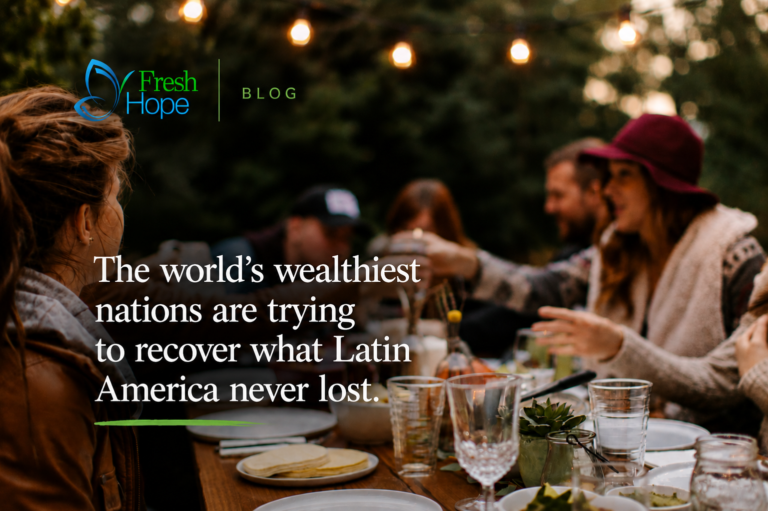
El estudio de salud mental más grande del mundo revela que los valores que la cultura latinoamericana ha practicado por generaciones —la fe, la familia, la comunidad, las comidas compartidas— son precisamente los factores que protegen la mente humana. Esto no es un premio de consolación frente a las circunstancias económicas. Es una ventaja global.

GABRIELA

Colombia • 31 años • Ansiedad • Madre primeriza

«En Fresh Hope encontré hermanas que oran por mí; encontré este ministerio cuando realmente pensaba que no había solución».

NATALIA

Colombia • Trastorno bipolar • Madre • Esposa

«Mi diagnóstico no me define. Yo elijo la esperanza».

BEATRIZ

Ecuador • Madre • Hijo con trastorno bipolar

«Hay esperanza, la recuperación es posible y no tienes que caminar esto solo».

MARTA

El Salvador • Madre • Hija con diagnóstico

«El Señor me ha mostrado exactamente el camino a seguir, y así es».


Cuatro mujeres. Cuatro países: Colombia, Ecuador, El Salvador, Venezuela. Cuatro diagnósticos entre ellas y sus familias. Cuatro testimonios que llevan, en su particularidad y su geografía, algo que el Informe Global de Salud Mental de Sapien Labs confirma con datos de 2.5 millones de personas: que Latinoamérica posee una riqueza en recursos de salud mental que el resto del mundo apenas empieza a comprender que ha perdido.


Los Datos Que Sorprendieron al Mundo

Cuando los investigadores de Sapien Labs publicaron sus hallazgos de 2025 sobre la distribución geográfica de la salud mental en jóvenes adultos, muchos en la comunidad global de salud mental se sorprendieron, y algunos se sintieron incómodos. Los datos no seguían el patrón que décadas de economía del desarrollo les habían enseñado a esperar.

Los países con el mayor gasto en salud per cápita, la mayor cantidad de psiquiatras por habitante y la infraestructura clínica más sofisticada no eran los países donde los jóvenes adultos prosperaban mentalmente. En muchos casos, se encontraban entre los de peor desempeño.


Top 10 Las naciones latinoamericanas se clasifican constantemente en los niveles más altos a nivel global en las puntuaciones de salud mental de los jóvenes adultos, superando a la mayor parte de Europa Occidental, el mundo angloparlante y el este de Asia.


30+ pts La ventaja promedio en la puntuación del Coeficiente de Salud Mental (MHQ) que las poblaciones con alta espiritualidad y fuertes lazos familiares tienen sobre las poblaciones de la misma edad e ingresos con baja espiritualidad y lazos familiares débiles.


39+ Países donde opera actualmente Fresh Hope Español, una red arraigada precisamente en las fortalezas culturales que la investigación identifica como las más protectoras.


Los investigadores descubrieron que los cuatro factores protectores más fuertes para la salud mental de los jóvenes —la espiritualidad, los lazos familiares, el uso retrasado de teléfonos inteligentes y las dietas basadas en alimentos integrales— no son principalmente producto de la riqueza. Son producto de la cultura. Y la cultura latinoamericana, en su expresión tradicional, posee los cuatro en una abundancia notable.


Cinco Fortalezas Culturales — Validadas por La Ciencia

Los datos de Sapien Labs apuntan a prácticas y valores culturales específicos que protegen la salud mental. Cuando los comparamos con las características de las comunidades latinoamericanas —particularmente aquellas formadas por la fe cristiana— la coincidencia es impresionante.


Familismo Una profunda lealtad familiar y obligación mutua; la disposición a sacrificar la comodidad personal por el bienestar de la familia. Los datos de Sapien Labs identifican esto como una de las fuerzas más protectoras para la salud mental de los jóvenes a nivel global.
Personalismo La prioridad de las relaciones cálidas y personales sobre la interacción transaccional. La conexión cara a cara se valora por sí misma, no solo como un medio para un fin. Esta es precisamente la cualidad relacional que las pantallas desgastan y las comunidades de apoyo restauran.
Fatalismo positivo La aceptación cultural de que algunas cosas están en manos de Dios, lo cual, lejos de ser pasivo, produce un tipo de paz y resiliencia que a las culturas altamente individualistas les cuesta alcanzar. La entrega a la soberanía de Dios como un recurso real de afrontamiento.
Comunidad de fe Las comunidades de fe como la institución social organizadora central, que brinda reuniones semanales, cuidado mutuo, una narrativa compartida y la conexión espiritual que la investigación identifica como el predictor individual más fuerte de la salud mental.
La mesa compartida La comida familiar como un ritual cultural no negociable, que combina las dimensiones nutricional, relacional y espiritual del bienestar en una sola práctica diaria. Exactamente hacia donde apuntan los datos sobre los alimentos ultraprocesados y la conexión social.


Estas no son características primitivas que deban modernizarse hasta desaparecer. Son, según el estudio de salud mental más exhaustivo jamás realizado, algunos de los recursos de salud mental más sofisticados de los que dispone una comunidad humana. La tragedia de la rápida modernización en Latinoamérica no es económica, sino cultural. Cada generación que cambia las comidas familiares por la comida rápida, la comunidad cara a cara por las redes sociales y la comunidad de fe por el individualismo, está cambiando factores protectores por factores de riesgo.


Lo Que Fresh Hope Reconoce

Fresh Hope Español no nació como una importación. Se construyó como un cultivo, tomando un modelo desarrollado en un contexto de fe norteamericano y arraigándolo profundamente en suelo latinoamericano, donde las condiciones culturales para que floreciera ya estaban presentes.

Cuando un grupo de Fresh Hope se reúne en Bogotá, en Quito, en San Salvador o en Buenos Aires, no está introduciendo conceptos extranjeros de comunidad, fe y cuidado mutuo. Está dando una expresión estructurada a lo que ya está en el ADN de esas comunidades. Proporciona el lenguaje, el marco y la facilitación para la sabiduría de salud mental que la cultura latinoamericana ya posee, pero que no siempre ha sabido cómo aplicar específicamente a la realidad de vivir con un diagnóstico.

PRINCIPIO DE RECUPERACIÓN DE FRESH HOPE III

Juntos nos va mejor que intentándolo por nuestra cuenta. Nos mantendremos mutuamente responsables de aprender, crecer y elegir seguir adelante con esperanza. «Por lo tanto, anímense unos a otros y edifíquense unos a otros». — 1 Tesalonicenses 5:11


El Principio III habla directamente a la dimensión comunitaria que los datos identifican como protectora. Juntos nos va mejor. Esto no es una técnica terapéutica tomada de la psicología occidental. Es la expresión en principio de recuperación de algo que la cultura latinoamericana ha practicado durante siglos: la convicción de que los seres humanos no están diseñados para enfrentar las cosas difíciles solos, y que la comunidad es la unidad natural de sanidad.


Cuatro Países, Una Sola Voz

Las cuatro mujeres cuyos testimonios abren este blog provienen de diferentes países, diferentes situaciones familiares y diferentes diagnósticos. Pero cuando lees sus palabras juntas, surge algo que trasciende sus historias individuales.

«Encontré este hermoso ministerio en un momento de mi vida en el que realmente pensaba que no había solución».

— Gabriela, Colombia


«Mi diagnóstico no me define. Yo elijo la esperanza».

— Natalia, Colombia


«Hay esperanza, la recuperación es posible y no tienes que caminar esto solo».

— Beatriz, Ecuador


«El Señor me ha mostrado exactamente el camino a seguir. Y así es».

— Marta, El Salvador


La falta de solución se convierte en esperanza. La esperanza se convierte en recuperación. La recuperación se convierte en acompañamiento. El acompañamiento se convierte en la fidelidad del Señor confirmada. Esto no es una secuencia planificada; es el testimonio orgánico de cuatro vidas diferentes en cuatro países distintos, todas formadas por la misma tierra cultural de fe, familia y comunidad. Y encaja perfectamente con los cuatro factores protectores que la investigación de Sapien Labs identifica como los más esenciales.


La Responsabilidad Que Viene con La Fortaleza

Hay un lado oscuro en esta buena noticia que debe mencionarse con honestidad. Si bien los valores culturales latinoamericanos son protectores, no lo son de manera uniforme. El mismo familismo que crea lazos fuertes también puede generar expectativas abrumadoras y la represión de la lucha individual. La misma comunidad de fe que ofrece pertenencia también puede producir la vergüenza y el estigma que Natalia, Beatriz y Cintia describen en sus testimonios: el mensaje silencioso de que una enfermedad mental es un signo de fe débil.

Los datos de Sapien Labs no celebran la cultura latinoamericana de forma acrítica. Identifican prácticas específicas —la calidad de los lazos familiares, la profundidad personal de la conexión espiritual— como protectoras. Estas pueden coexistir con actitudes dañinas. Y la contribución particular de Fresh Hope en las comunidades latinoamericanas es precisamente rescatar las fortalezas mientras desmantela el estigma.

Cuando un grupo de Fresh Hope se reúne y dice: no juzgamos, ni damos sermones; escuchamos, compartimos y crecemos, está reclamando las fortalezas comunitarias y de fe de la cultura latinoamericana, liberándolas de la vergüenza que a veces ha impedido que la gente acceda a ellas. La cultura ya tiene la medicina. Fresh Hope ayuda a la cultura a usarla.


Un Mensaje para Las Iglesias Latinoamericanas

Si lideras una iglesia, un ministerio o una comunidad de fe en cualquier lugar de Latinoamérica —o entre la diáspora latinoamericana— este blog está dirigido, en parte, a ti.

Tu comunidad ya posee la mayor parte de lo que el estudio de salud mental más grande del mundo dice que la gente más necesita. Tienes familias que aún se reúnen. Tienes una fe que sigue viva y es personal. Tienes una tradición de cuidado comunitario y acompañamiento mutuo. Tienes el ADN cultural que los investigadores en Londres, Singapur y Nueva York están estudiando, intentando comprender qué es lo que tienes y cómo recuperarlo.

Lo que quizás aún no tengas es un marco para aplicar estas fortalezas específicamente a las personas de tu congregación que viven con un diagnóstico de salud mental, y a sus familias. Personas que sufren en silencio, temerosas de que su condición las haga menos bienvenidas. Personas cuyos seres queridos están agotados e aislados, cargando un peso que la comunidad a su alrededor no ve.

«Si pudiera decirle algo a un familiar que tiene un ser querido con un diagnóstico: hay esperanza, la recuperación es posible y no tienes que caminar esto solo».

— Beatriz, Ecuador


Fresh Hope es ese marco de trabajo. Es la estructura que permite que la comunidad que ya tienes se convierta en la comunidad de sanidad que siempre estuvo destinada a ser. Capacita a facilitadores dentro de tu propia congregación. Le da lenguaje a lo que la gente está experimentando. Crea el espacio donde las fortalezas de la cultura y la esperanza del evangelio se encuentran con la realidad de la enfermedad mental —sin vergüenza, sin juicio y sin que nadie tenga que caminar solo.

Latinoamérica tiene algo que el mundo necesita. La investigación lo confirma. Los testimonios de Gabriela, Natalia, Beatriz, Marta, Norcángel, Cintia y Sergio lo encarnan. Y Fresh Hope existe para ayudar a que esto llegue a cada persona que lo necesite.


PRÓXIMO EN ESTA SERIE | BLOG 10 DE 10

Cómo Revertir La Crisis — Juntos. El blog final de la serie reúne los diez temas y lanza un llamado claro a las personas, las familias, las iglesias y las comunidades. Las ocho voces hablan una vez más. Y un ministerio global que comenzó como una conversación en una iglesia en Nebraska ahora se extiende por más de 39 países, todo porque alguien decidió responder.


SOBRE FRESH HOPE

Fresh Hope es una red internacional de grupos cristianos de apoyo mutuo para personas que viven con un diagnóstico de salud mental y sus seres queridos. Con más de 250 participantes semanales en más de 39 países, Fresh Hope integra principios de recuperación basados en evidencia con una comunidad centrada en la fe. Encuentra un grupo cerca de ti en freshhope.us


REFERENCIA DE LA INVESTIGACIÓN

Sapien Labs. Global Mind Health in 2025 [Salud mental global en 2025]. Febrero de 2026. sapienlabs.org
Comparte esta publicación:

Vivir el Momento

Por Peggy Rice, Entrenadora de Agentes de Esperanza (Hope Coaches) para Fresh Hope

The sun was coming in the bottom of the open window, and from the small bit of sky that I could see, it was clear and blue. The forecast had indicated 70s today, and since I live in a high desert state, very little humidity. An absolutely lovely day, by almost anyone’s definition!

But instead of focusing on the glorious day, or even taking a moment to thank God for it, I rolled away from the window and scrunched my eyes closed. And my thoughts began to race. Not in prayer, but in fear and anxiety. My mind, unbidden, began to focus on a week from now, and all that I was going to have to do in a very short time.

I was thinking about how there was going to be “stuff” in every nook and cranny, and how were we (me and my husband, my sister and hers) going to sort through it all and pare it down drastically to make it comfortable for my parents as we move them from the house of 30 years to a two-bedroom first-floor apartment?

“When was the last time those magazines had even been looked at? Could we just get rid of them, or do we have to ask first? And what’s in the hall cupboards? Can we toss stuff from the kitchen?”

I caught myself, and so I began to pray.

“Lord, help me start my morning with You, not with a to-do list for a week that hasn’t even arrived yet.”

That worked for about five minutes. Then I realized I was already thinking about who I needed to contact tomorrow and what I needed to follow up on next.

Agh!

Again, I gently pulled my thoughts back: “Start the day with God.”

Finally, I threw myself out of bed, hoping that by sitting in my chair where I have my morning devotions, it would help me focus on the Lord and not my to-dos.

I’ve always been someone who loves a list. Actually, I love the checkmark I make when I take something off my list. But lately — especially this week — the Holy Spirit has been showing me that my constant focus on my list was beginning to crowd out my priorities: God first, family second, ministry third.

In the case of moving our parents, that would be #2 and #3 combined. But still, God is to come first!

Not only that, but I was missing a beautiful morning because I was so distracted by everything waiting ahead of me. What I could have done was take my coffee and my prayers outside and sit in the beauty of the morning. Instead, I was mentally racing down the path of what was coming later this week.

I realized I wasn’t really living in today at all. I was already emotionally living in next week.

One of the hardest things about living with emotional pain, mental health struggles, chronic illness, or overwhelming life circumstances is that our minds constantly run ahead.

We don’t just carry today’s pain, tasks, or fears. We carry tomorrow’s too.

What if this gets worse?

What if I never feel better?

What if I can’t handle what’s coming?

What if this situation never changes?

But Jesus speaks directly into that spiral of future-focused fear:

“Therefore do not worry about tomorrow, for tomorrow will worry about itself. Each day has enough trouble of its own.” — Matthew 6:34

Notice something important: Jesus does not deny that today has trouble.

He simply reminds us that God only asks us to carry today’s portion.

There is a difference between preparing wisely for the future and emotionally living there. Many of us spend enormous amounts of energy suffering through imagined tomorrows while missing the grace and beauty that God is giving us right now.

God’s pattern throughout Scripture is daily dependence.

  • Daily bread.
  • Daily mercy.
  • Daily strength.

When God provided manna for the Israelites in the wilderness, He gave them enough for one day at a time. Not because He wanted them anxious, but because He wanted them dependent. Trust grows in daily surrender.

Lamentations tells us:

“His mercies never come to an end; they are new every morning.”

Not all at once for the next ten years.
New every morning.

Sometimes we think:

“I can’t do this for another year.”
“I can’t survive this forever.”

Maybe not.

But perhaps God is only asking you to trust Him for today.

Just today.

Today, you can breathe.
Today, you can pray.
Today, you can ask for help.
Today, you can rest.
Today, you can take the next small step.

And when tomorrow comes, God’s mercy will meet you there too.

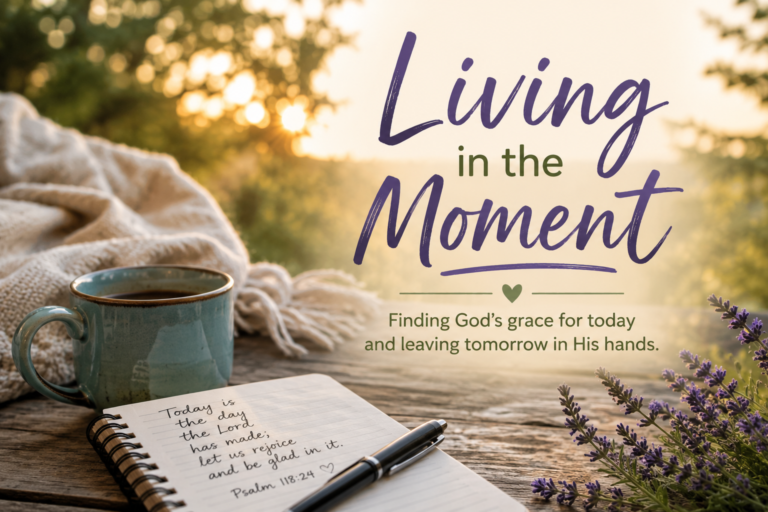
“This is the day the Lord has made; let us rejoice and be glad in it.” — Psalm 118:24

Not because today is perfect.
Not because life is easy.
But because God is still present in it.

Maybe hope sometimes looks less like solving the future and more like staying present with God today.

Peggy ha colaborado con Fresh Hope como facilitadora de grupos durante más de 8 años y como entrenadora de agenes de esperanza (Hope Coaches) durante más de 6 años. Puedes ponerte en contacto con ella en peggy@freshhope.us.

Comparte esta publicación:

A mental health diagnosis can quietly rewrite a person’s identity — shrinking them down to their condition and cutting off their sense of future. Fresh Hope teaches something the research confirms: choosing to overcome is not denial. It is the most powerful decision a person can make.

«Mi diagnóstico no me define. Yo elijo la esperanza».

— Natalia, Colombia — living with bipolar disorder

Depression and anxiety do not live in my life. Today I know that recovery is slow — but it is possible. And every small step forward counts.

— Sergio, Guatemala/Mexico — living with depression and generalized anxiety


Between them, Natalia and Sergio have accumulated years of suffering, misdiagnosis, silence, and shame. Natalia spent years convinced that what she was experiencing was a spiritual failing. Sergio spent years showing up — working, smiling, fulfilling his obligations — while quietly falling apart inside. Both of them reached a point where they genuinely did not know if things could get better.

And both of them made a choice that changed the trajectory of everything. Not a single dramatic moment — but a decision, renewed day by day, to overcome. To not be defined by what they were living through. To choose hope when nothing in their circumstances required it.

This is what Recovery Principle VI is about. And it is also, according to the research, one of the most clinically significant decisions a person with a mental health challenge can make.


The Victim Identity and Why It Happens

Before exploring what Fresh Hope offers, it is worth being honest about why the victim identity is so easy to fall into — because it is not a character flaw. It is a completely understandable response to genuine suffering.

When a person receives a serious mental health diagnosis, their world often reorganizes itself around that diagnosis. Relationships change. Opportunities narrow. Plans are revised. Over time, it becomes natural to explain everything through the lens of the condition: why things went wrong, why opportunities were missed, why relationships broke down. The disorder becomes the story.

This is especially true in cultures — including many Christian communities in Latin America — where mental illness still carries significant stigma. When a person absorbs the message that their condition makes them lesser, damaged, or spiritually deficient, the victim identity is not just a coping mechanism. It is a survival response to a hostile environment.


FRESH HOPE RECOVERY PRINCIPLE VI

At times I have allowed myself to become a victim, “defined” by my disorder. Therefore I choose to overcome and live in hope and joy, in spite of my disorder.  At times, I have viewed myself as a victim of my loved one’s behavior and disorder, living in resentment, anger, unforgiveness, or self-pity. Therefore, I choose to separate the disorder from the person I love, forgive and let go of the past, and live as a contributor to successful recovery.  Together, we share in each other’s victories and celebrate the whole person.  “For God has not given us a spirit of fear, but of power and love and a sound mind.” — 2 Timothy 1:7


Notice what this principle does not do: it does not minimize the suffering. It does not tell people to pretend the disorder isn’t real, or to perform positivity they don’t feel. It says: at times I have allowed myself to become a victim. It acknowledges the pull toward that identity — and then, gently but firmly, invites a different choice.


The Research on Identity and Recovery

The connection between identity and recovery outcomes is one of the most robust findings in mental health research. Studies consistently show that how a person defines themselves in relation to their diagnosis is one of the strongest predictors of long-term functioning.


87.5% Of Fresh Hope participants who previously considered their disorder a defining feature of their identity report a significant shift in self-perception after consistent group participation.


0% Of Fresh Hope participants in the suicidality outcomes study reported the same or worse ideation after participation — the entire cohort either improved or fully resolved.


2 Tim 1:7 The scriptural anchor of Principle VI — not a spirit of fear, but of power, love, and a sound mind — speaks directly to the identity question at the heart of recovery.


People who identify primarily as a patient, a sufferer, or a victim of their condition tend to have more passive relationships with their treatment, lower rates of treatment adherence, and poorer long-term outcomes. People who identify primarily as a person who happens to have a condition — and who see themselves as active agents in their own recovery — consistently do better across every measurable dimension.

This is not a blame-the-patient argument. It is a recognition that identity is malleable, that it can be reshaped by community and by the stories we tell ourselves — and that peer communities like Fresh Hope are uniquely positioned to do that reshaping.


Natalia’s Choice

Natalia’s journey from diagnosis to purposeful living did not follow a straight line. She lived for years in a place of deep confusion — experiencing the real symptoms of bipolar disorder while being told by the culture around her that what she was living was a spiritual problem. The guilt she carried was not just about her condition. It was about who she believed she was.

Today, having a diagnosis does not separate me from the love of God. On the contrary — it has taught me humility and compassion for others who struggle in silence. Today I know I can live with purpose even in the middle of my struggle.

— Natalia, Colombia


The movement in Natalia’s testimony is remarkable. She does not say the bipolar disorder went away. She says it taught her something — humility, compassion, the capacity to see others who are struggling in silence. Her diagnosis became a teacher rather than a jailer. Her suffering became a resource rather than a verdict.

This is the shift that Fresh Hope facilitates: from a diagnosis that defines and diminishes, to a story that has been redeemed and now has purpose. It is not instant. It is not without pain. But it is real, and it is measurable, and Natalia is living proof.


Sergio’s Declaration

Sergio’s testimony contains one of the most striking lines in the entire collection — a declaration so clear and confident that it is worth reading slowly.

Depression and anxiety do not live in my life. Today I know that recovery is slow, but it is possible. And every small step forward counts. I live with depression, I live with generalized anxiety — but depression and anxiety do not live in me.

— Sergio, Guatemala/Mexico


Read that again: I live with depression, I live with generalized anxiety — but depression and anxiety do not live in me. This is not denial. Sergio is not pretending his conditions do not exist. He is asserting that they do not own the house. They are present — but they are not in charge.

This distinction — between having a condition and being defined by it — is precisely what the recovery research identifies as the tipping point. The moment a person stops saying “I am depressed” and starts saying “I have depression, and I am also a father, a friend, a man who loves God, a person with something to offer” — that reorientation is correlated with significantly better treatment engagement, social functioning, and long-term outcomes.


DEFINED BY THE DISORDER

I am my diagnosis

My condition defines my future

I have nothing to offer others

LIVING WITH PURPOSE

I choose hope

My diagnosis does not define me

My pain has purpose for others


This shift does not happen in isolation. It happens in community — in the presence of people who already hold that larger identity for you while you are still finding your way to it. It happens when Norcángel tells a newly diagnosed person: there is hope, recovery is possible. It happens when Cintia says: you are not your diagnosis, you are a child of God. It happens when Sergio, at 49, records a video testimony to tell someone he has never met: I made it through. And so can you.


For the Loved One: The Parallel Journey

Principle VI addresses not just the person with the diagnosis, but their loved ones — and it names something that caregiver communities rarely talk about openly: the victim identity that caregivers can develop alongside the person they love.

Resentment, anger, unforgiveness, self-pity — these are not signs of bad character in a caregiver. They are signs of a person who has been carrying an enormous weight without adequate support, framework, or community. Fresh Hope’s inclusion of loved ones in the same groups where the person with the diagnosis is finding freedom is not an accident. It is a recognition that both people need to make the journey from victim to purposeful survivor.

Beatriz and Marta, whose testimonies we heard in Blog 3, are both on this journey. The mother who prayed for years and found Fresh Hope as God’s answer. The mother who chose to walk alongside her son without being consumed by the struggle. Both of them choosing, in Principle VI’s language, to be contributors to successful recovery rather than collateral damage from the disorder.


A Word to Anyone Who Feels Defined by Their Diagnosis

If you have been living inside the story that your condition tells about you — if you have let the diagnosis shrink your sense of who you are and what is possible — we want to speak directly into that.

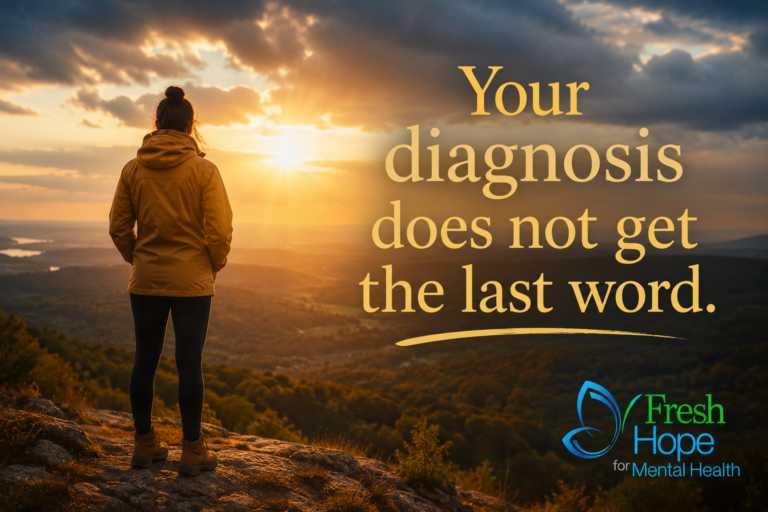
You are not your depression. You are not your bipolar disorder. You are not your anxiety. These are conditions you live with. They are real, they are hard, and they deserve serious treatment and support. But they are not the sum of your identity, and they do not get to write the ending of your story.

«Mi diagnóstico no me define. Yo elijo la esperanza».

— Natalia, Colombia

Four words. The most concise summary of everything Recovery Principle VI, the peer support research, and the testimony of hundreds of Fresh Hope participants point toward. Not an absence of struggle. Not a denial of diagnosis. A choice — made in full awareness of what the condition is and what it costs — to be more than it.

That choice is available to you. And if you cannot quite make it yet on your own, Fresh Hope exists to be the community that holds it for you until you can — and then celebrates with you when you do.


NEXT IN THIS SERIES  |  BLOG 9 OF 10

Latin America Has Something the World Needs  The world’s largest mind health study identifies the very things that Latin American culture has always practiced — family, faith, community, shared meals — as the most powerful protectors of mental wellbeing. Four women from four countries share what that looks like from the inside.


SOBRE FRESH HOPE

Fresh Hope es una red internacional de grupos cristianos de apoyo mutuo para personas que viven con un diagnóstico de salud mental y sus seres queridos. Con más de 250 participantes semanales en más de 39 países, Fresh Hope integra principios de recuperación basados en evidencia con una comunidad centrada en la fe. Encuentra un grupo cerca de ti en freshhope.us

REFERENCIA DE LA INVESTIGACIÓN

Sapien Labs. Global Mind Health in 2025 [Salud mental global en 2025]. Febrero de 2026. sapienlabs.org

Comparte esta publicación:

Explore All Posts

Your Word for the New Year

We’re several weeks into the New Year. (Maybe soon, I’ll stop writing 2024!) My Christmas decorations have been put away, I’m back home after visiting

Leer Más »

On Thanksgiving

By Peggy Rice A Norman Rockwell painting (Freedom From Want, 1943) shows a Thanksgiving feast, with the whole family gathered around the edges, and a

Leer Más »

Are YOU a Suicide Survivor?

By Mike Jacquart I\’ll never forget the phone call. It was from my good friend, Tim*, on a Sunday ,morning in late April, 2008. His

Leer Más »

On Hearing God

by Peggy Rice I recently got new hearing aids. I’d had my old ones for a little over 7 years. Since that time, the technology

Leer Más »

Get Vulnerable

By Scott Box I produce music in a backyard studio. I have some skills, but professional music producers blow me away with their final products.

Leer Más »

INSCRÍBASE EN LA PARTE SUPERIOR DERECHA DEL SITIO WEB

Webinar "Cómo pueden las iglesias facilitar el acceso a la atención de salud mental"

Regístrese aquí para ver gratis

Webinar "Lo que desearía que mi pastor supiera sobre salud mental"

Regístrese aquí para ver gratis

Dé el primer paso para crear su propia empresa
Grupo de apoyo Fresh Hope

Este campo tiene fines de validación y no debe modificarse.
Nombre(Requerido)
País(Requerido)

Por favor, rellene este formulario para que podamos proporcionarle más detalles sobre cómo iniciar un Ministerio Hope Coach.

Mejor momento para contactar

Introduce tus datos y nos pondremos en contacto contigo para que te conviertas en Hope Coach

Mejor momento para contactar

Lo que su donación puede hacer por
Esperanza para los desesperados

Por cada 32 centavos donados, podemos ofrecer esperanza durante una semana a una persona con un desafío de salud mental.

Por cada $16.64 donados anualmente, podemos ofrecer esperanza durante un año a una persona.

Cualquier cantidad que puedas donar ayudará a llevar esperanza a quienes la necesitan desesperadamente.

¿Qué tipo de donación te gustaría hacer?

Introduce tus datos para hablar con un Hope Coach

Mejor momento para contactar

Gracias por dar el siguiente paso
hacia la esperanza.

Queremos asegurarnos de que le enviamos la información que mejor se adapte a sus necesidades, así que tómese unos minutos para rellenar los datos que figuran a continuación.

(Tenga en cuenta que su privacidad es nuestra mayor preocupación. Fresh Hope nunca venderá sus datos y su información se mantendrá estrictamente confidencial).

Nombre

Dirección

Teléfono / Email

Lo que mejor me describe es lo siguiente